


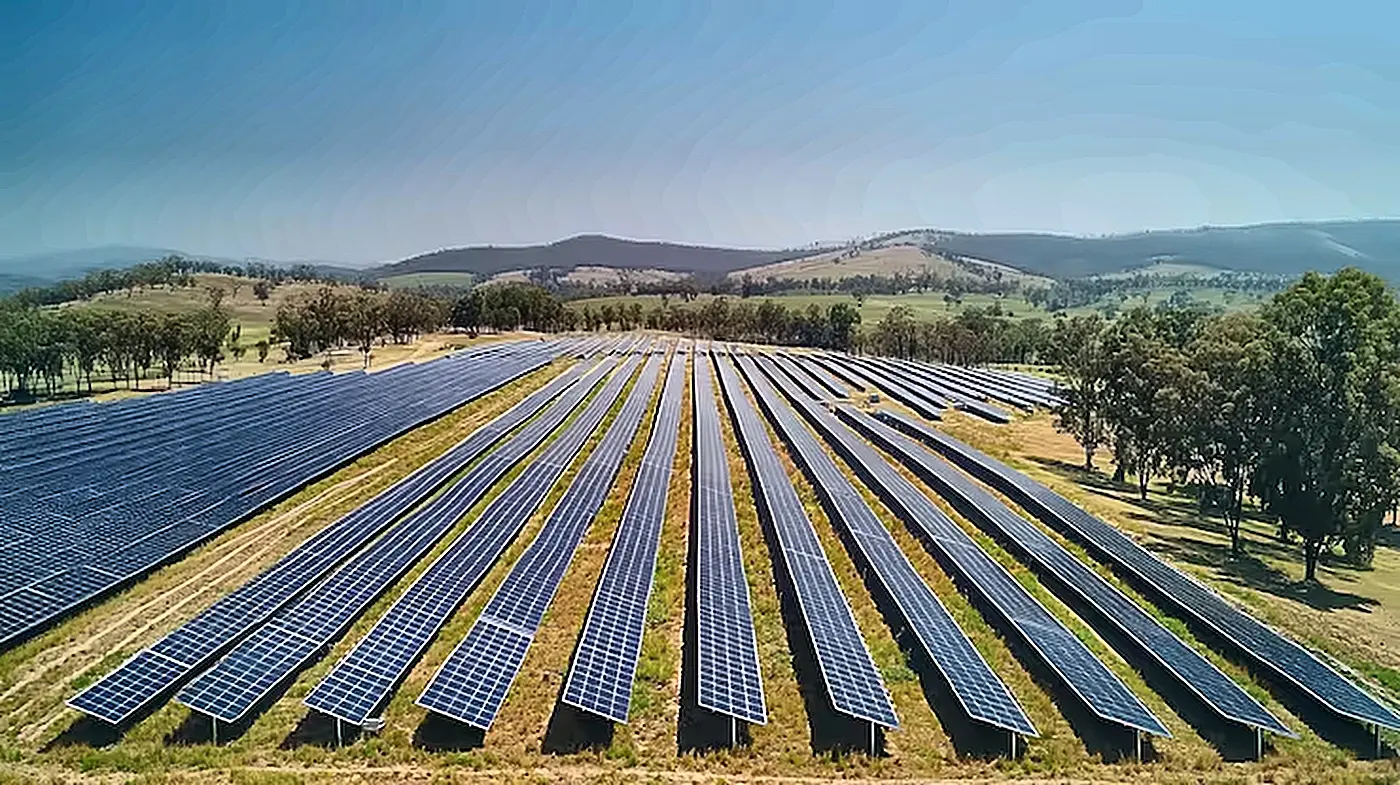
Large-scale solar power has become an increasingly important part of the UK’s transition towards a cleaner, more secure energy system. As solar capacity continues to grow, so too has the debate around how solar farms use land, their impact on agriculture and whether they can support biodiversity.
Some of the criticism surrounding large-scale solar suggests that solar farms are taking significant amounts of valuable farmland out of food production. However, when the available evidence is considered, the picture is considerably more nuanced.
Solar farms currently occupy only a small proportion of the UK’s total land area, while carefully managed sites can provide benefits for biodiversity, soil health and farmers’ long-term financial resilience.
How Much Land Do Solar Farms Use in the UK?
The UK’s solar industry has expanded significantly over the last decade. There are now around 24GW of installed solar capacity across the country, generating enough electricity to supply millions of homes.
Despite this growth, the amount of land occupied by solar farms remains relatively small compared with the UK’s overall land area.
Research from Lancaster University, published in Progress in Energy in 2025, examined more than 1,000 solar farms using satellite imagery. The research found that solar farms occupy approximately 0.07% of the UK’s total land area.
Even if the UK were to reach 70GW of solar capacity by 2035, estimates suggest that ground-mounted solar would occupy only a fraction of the country’s land. Depending on assumptions about future rooftop solar deployment, the figure could be between approximately 0.31% and 0.56% of total UK land.
This is important when considering the wider demands being placed on land in the UK. Agriculture, housing, infrastructure, nature recovery and renewable energy all need to be accommodated, but the evidence suggests that these requirements do not necessarily have to compete for the same land.
Can the UK Expand Solar Without Losing Farmland?
One of the biggest concerns surrounding large-scale solar development is its relationship with agricultural land.
It is important to acknowledge that some solar developments have been built on land classified as Best and Most Versatile (BMV) agricultural land. However, this represents only part of the overall solar estate.
Data from Solar Energy UK’s SolarPulse platform indicates that around 37.6% of solar farms include some BMV land. At those sites, approximately 20% of the area is BMV land on average.
This means that the majority of solar development is located on Grade 3b land or lower, rather than the highest-quality agricultural land.
Planning policy also plays an important role. Solar farms are generally temporary developments, with planning permissions typically lasting for a defined operational period. At the end of that period, the equipment can be removed and the land returned to its previous use.
This makes large-scale solar different from permanent urban development, where land can be permanently taken out of agricultural use.
Solar Farms and Soil Health
Land beneath and around solar panels does not necessarily have to become unusable.
Well-designed solar farms can incorporate grassland, wildflower areas, hedgerows and other ecological features. Instead of intensive cultivation, some sites can be managed using low-intensity grazing or conservation-focused land management.
Reducing intensive agricultural activity can give soils an opportunity to recover. Research into solar farm land management has also highlighted the potential for improvements in soil condition and carbon levels where sites are managed appropriately.
The outcome depends heavily on how an individual solar farm is designed and operated. A well-managed site can provide considerably greater environmental value than a poorly managed one.
Could Solar Farms Actually Support Biodiversity?
Biodiversity is another important part of the large-scale solar debate.
Agricultural land does not automatically provide high levels of biodiversity. Intensively cultivated farmland can provide relatively limited habitat for wildlife, particularly where fields are managed primarily for high agricultural output.
Solar farms can create opportunities to introduce or restore habitats such as wildflower meadows, grassland, hedgerows and field margins.
Research involving organisations including the RSPB and the University of Cambridge has indicated that appropriately managed solar farms can support significantly more birdlife than surrounding intensively managed arable farmland.
Species such as corn buntings, yellowhammers and linnets can benefit where solar developments incorporate suitable habitats and ongoing ecological management.
However, this should not be interpreted as meaning every solar farm automatically improves biodiversity. Site selection, ecological design and long-term management are crucial.
The Relationship Between Solar Energy and Food Security
The question of food security is often central to discussions about solar farms.
The UK’s agricultural sector faces challenges that extend well beyond land availability. Climate change, extreme weather, flooding, changing growing conditions, input costs and market volatility can all affect agricultural productivity.
Climate change is particularly significant.
Increasing temperatures, changing rainfall patterns and extreme weather events can affect crop yields and soil conditions. Some of the UK’s most productive farmland is also increasingly vulnerable to flooding.
This creates an important distinction in the debate. Renewable energy development needs to be planned responsibly, but tackling climate change is itself essential for protecting Britain’s long-term food production.
Solar power can contribute by reducing dependence on fossil fuels and increasing the proportion of electricity generated from renewable sources.
Solar Farms Can Provide Farmers With Additional Income
For farmers, solar development can also provide an opportunity to diversify their income.
Agricultural businesses can face considerable financial uncertainty due to changing markets, input costs, weather conditions and changes to agricultural support.
Leasing suitable land for solar development can provide a more predictable long-term income stream.
Solar Energy UK’s Farming Sustainably report, based on research involving more than 270 farmers, highlighted the financial pressures experienced by the agricultural sector. A significant proportion of respondents reported below-average incomes or production levels.
For some landowners, renewable energy can therefore form part of a wider farm diversification strategy.
Income from solar can potentially help farmers invest in their businesses, improve infrastructure and provide greater financial security for future generations.
Solar Power and the UK’s Energy Security
The benefits of large-scale solar extend beyond land management.
The UK has historically relied heavily on imported fossil fuels. International events, changes in global demand and geopolitical instability can all contribute to significant fluctuations in energy prices.
Solar power provides a domestic source of electricity that does not depend on imported fuel.
The cost of solar technology has also fallen dramatically since 2010, making solar one of the most cost-effective sources of new electricity generation.
Although solar generation is naturally dependent on daylight and weather conditions, combining solar with other renewable technologies, electricity storage, flexible demand and an increasingly modernised electricity grid can help create a more resilient energy system.
Why Solar Energy Matters for the UK’s Future
The debate around large-scale solar should not simply be framed as agriculture versus renewable energy.
The UK’s future land-use requirements are much more complicated. The country needs to produce food, build homes, protect biodiversity, strengthen energy security and reduce carbon emissions.
These objectives can often work together.
Well-planned solar farms can provide renewable electricity while maintaining agricultural uses such as grazing and creating opportunities for biodiversity improvements. Temporary solar developments can also allow land to return to agricultural use once a site’s operational life has ended.
This does not mean that every proposed solar farm is automatically appropriate. Location, landscape impact, agricultural quality, drainage, biodiversity, grid connection and local planning considerations all need to be carefully assessed.
A More Balanced Approach to Large-Scale Solar
Large-scale solar development needs to be approached responsibly.
Good solar planning should prioritise appropriate sites, minimise impacts on valuable agricultural land, protect existing ecological features and incorporate biodiversity measures wherever possible.
At the same time, discussions about solar should be based on the amount of land actually being used rather than exaggerated estimates.
The evidence shows that the UK’s solar industry occupies a relatively small proportion of the country’s land. With careful planning and responsible land management, solar farms can coexist with agriculture and potentially provide additional environmental and financial benefits.
The Future of Solar Energy in the UK
The UK’s energy system is changing rapidly. Solar power is expected to play an increasingly important role alongside wind, energy storage, grid investment and other low-carbon technologies.
As electricity demand grows and the country works towards its long-term net-zero ambitions, increasing renewable generation will be essential.
Large-scale solar is therefore not simply about installing more panels. It is about finding practical ways to use the UK’s land and energy resources efficiently while protecting the environment and supporting communities.
The evidence increasingly suggests that renewable energy, food production and nature recovery do not have to be mutually exclusive. With responsible planning and effective land management, large-scale solar can form an important part of a more secure, sustainable and resilient UK energy system.
Final Thoughts
Concerns about farmland, food production and biodiversity should always be taken seriously when new solar developments are proposed. However, the discussion needs to consider the full evidence rather than focusing solely on the visual presence of solar panels.
Solar farms occupy a relatively small percentage of UK land and, when appropriately located and managed, can support renewable electricity generation, provide farmers with additional income and create opportunities for wildlife and habitat restoration.
As the UK moves towards a lower-carbon energy system, large-scale solar is likely to remain an important part of the country’s renewable energy mix.
