


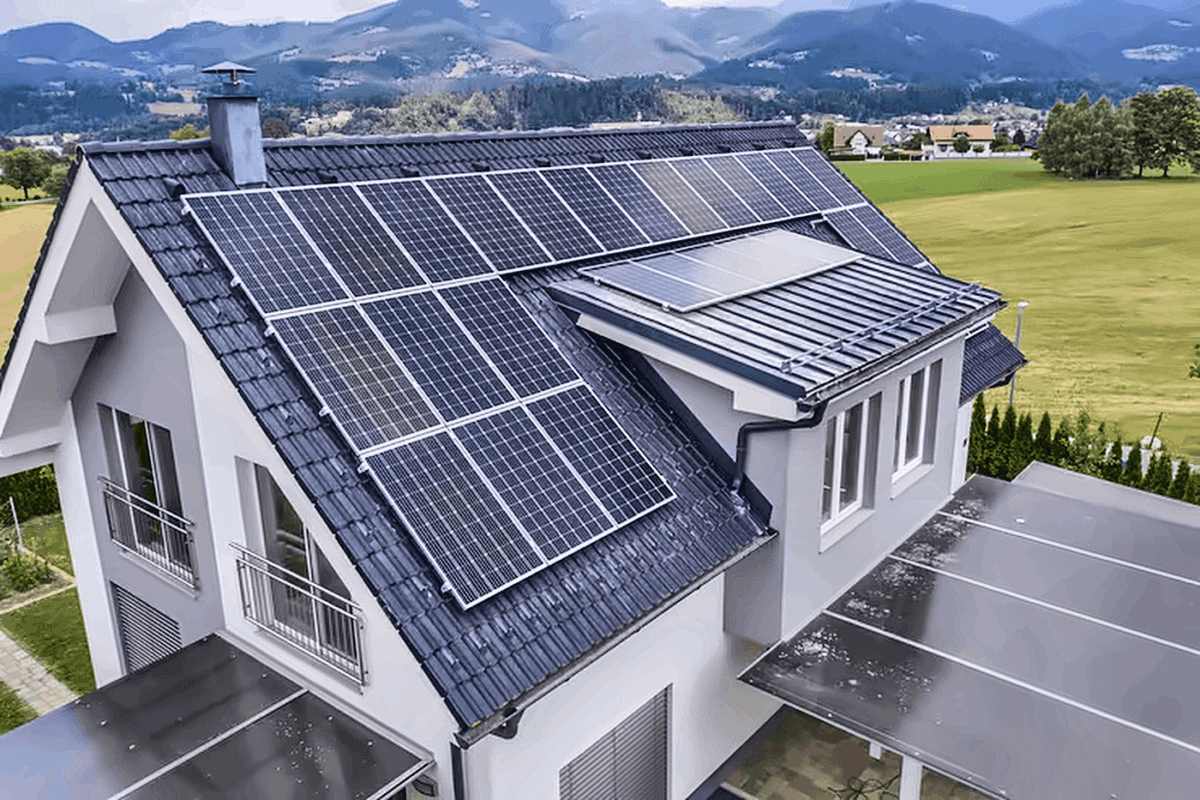
Solar panels have become an increasingly popular way for UK homeowners to generate renewable electricity and reduce their reliance on energy from the grid. Traditionally, solar panels are installed above an existing roof using mounting rails. However, integrated solar roofing offers an alternative approach by incorporating solar technology directly into the roof design.
An integrated solar roof can provide the same core benefit of generating renewable electricity while creating a more streamlined appearance. This can make it particularly appealing for new-build homes, extensions, renovations and properties where the appearance of the roof is an important consideration.
But solar roof design is about more than appearance. The roof structure, orientation, pitch, weatherproofing, electrical system, energy storage and future energy requirements all need to be considered together.
This guide explains how integrated solar roofs work, the benefits they can offer UK homeowners and the key factors to consider before investing in a solar roofing system.
What Is an Integrated Solar Roof?
An integrated solar roof incorporates photovoltaic technology into the roof itself rather than simply mounting conventional solar panels above existing roof coverings.
Depending on the system, solar modules can replace sections of conventional roofing materials while forming part of the external roof surface. The result is a more flush appearance compared with traditional panel installations.
This approach is sometimes described as:
- Integrated solar roofing
- Solar roof systems
- Roof-integrated solar panels
- Building-integrated photovoltaics (BIPV)
- In-roof solar panels
The exact construction varies between products, so homeowners should look at the complete roofing system rather than assuming every integrated solar solution works in the same way.
How Does Solar Roofing Work?
An integrated solar roof performs two functions at the same time.
First, it provides a weather-resistant roof covering designed to protect the property from rain, wind and other external conditions.
Second, photovoltaic modules generate electricity when exposed to sunlight.
Electricity generated by the solar system can be used within the property, with surplus electricity potentially exported to the grid depending on the system, tariff and relevant arrangements.
A solar roof can also form part of a wider home energy system incorporating:
- Solar batteries
- Electric vehicle charging
- Smart energy management
- Heat pumps
- Home energy monitoring
- Other electrical loads
This means solar roofing can be considered as part of a property’s overall energy strategy rather than simply a standalone roof upgrade.
Why Are UK Homeowners Considering Integrated Solar Roofs?
Traditional solar panels remain an effective option for many properties, but integrated systems can offer additional design and installation benefits.
A More Streamlined Appearance
One of the biggest attractions is aesthetics.
Traditional panels sit visibly above the roof covering. An integrated system can create a flatter, more cohesive appearance by incorporating the solar modules into the roof design.
This can be particularly attractive for:
- Contemporary homes
- New builds
- Architect-designed properties
- Extensions
- Major renovations
- Homes where roof aesthetics are important
Roofing and Solar Can Be Considered Together
If a roof is already approaching the end of its useful life, homeowners may have an opportunity to consider roofing and solar at the same time.
Rather than replacing the roof and subsequently installing solar panels, an integrated approach can allow both elements to be designed together.
This can help create a more coordinated roof design and potentially reduce the need to carry out separate installation work at different times.
Renewable Electricity Generation
The fundamental benefit remains solar electricity generation.
A suitably designed solar PV system can generate electricity during daylight hours, helping reduce the amount of electricity a household needs to purchase from the grid.
Actual generation depends on factors such as:
- Roof orientation
- Roof pitch
- Shading
- Location
- System size
- Panel efficiency
- Weather conditions
- Household electricity demand
A professional assessment is therefore important before making assumptions about potential generation or savings.
How Roof Design Affects Solar Performance
The roof itself plays an important role in determining how effectively a solar system can operate.
Roof Orientation
The direction a roof faces affects the amount and timing of sunlight it receives.
South-facing roofs are often favourable for solar generation in the UK, but east- and west-facing roofs can also provide useful generation, particularly where household electricity demand occurs throughout the day.
A professional solar assessment should consider the property’s actual roof orientation rather than relying on a general rule.
Roof Pitch
Roof angle can influence solar performance, but there is no single pitch that works for every property.
The available roof area, orientation, shading and surrounding environment all need to be considered together.
Shading
Trees, chimneys, neighbouring buildings, dormers and other structures can reduce solar generation.
Even partial shading can affect the output of a solar array, depending on the system design.
A proper site assessment should therefore identify potential shading issues before the system is specified.
Which UK Properties Are Suitable for Integrated Solar Roofing?
Integrated solar systems can be considered for a range of property types, although suitability will depend on the specific roof and product.
New-Build Homes
New construction provides an opportunity to consider solar generation from the earliest stages of the design.
Roof structure, electrical requirements, solar orientation and energy performance can all be coordinated before construction is complete.
This can create a more cohesive result than attempting to retrofit an energy system after the building has already been designed.
Home Extensions
An extension can provide an opportunity to introduce additional solar generation while creating a new roof surface.
For homeowners already investing in a significant extension, integrating energy generation into the roof design can be worth considering alongside insulation, heating and ventilation.
Existing Homes
Integrated solar roofing can also be considered when an existing roof requires substantial work or replacement.
However, the existing roof structure, covering, condition and construction need to be assessed carefully before an installation is specified.
Integrated Solar Roof vs Traditional Solar Panels
There is no universally better option. The right choice depends on the property, budget, roof condition and priorities of the homeowner.
| Feature | Integrated Solar Roof | Traditional Solar Panels |
| Appearance | More streamlined and integrated | Panels sit above the roof |
| Roof replacement | Can be incorporated into roof works | Existing roof generally remains |
| New builds | Particularly suitable | Also widely used |
| Existing roofs | May require greater roof integration | Often easier to retrofit |
| Design flexibility | Strong architectural appeal | Wide range of established options |
| Solar generation | Depends on system design | Depends on system design |
| Installation | Requires coordinated roofing and electrical work | Established installation method |
A professional assessment can help determine which approach makes the most sense for a particular property.
Can Solar Roofing Work With Battery Storage?
Yes, solar roofing can form part of a wider solar-plus-storage system.
Solar panels generally generate electricity during daylight hours, while household electricity demand can continue into the evening.
A battery can store some surplus generation for later use, depending on the battery capacity, system configuration and household consumption.
For example, excess solar electricity generated during the afternoon could potentially be stored and used later when household demand increases.
Battery storage can therefore be particularly useful for households looking to increase their use of self-generated electricity.
Solar Roofs and Electric Vehicle Charging
The growth of electric vehicles is another reason homeowners are considering a more integrated approach to domestic energy.
A solar roof can work alongside an EV charger, allowing some household solar generation to be directed towards vehicle charging.
The actual benefit will depend on when the vehicle is charged, how much electricity the solar system generates and whether battery storage is included.
When planning a new energy system, it is therefore sensible to consider future electricity requirements rather than designing the solar installation around today’s needs alone.
What Should You Consider Before Installing a Solar Roof?
1. The Condition of Your Existing Roof
If your roof is already in poor condition, installing solar technology before addressing underlying roofing problems may not be the best approach.
A roof assessment should establish whether repairs, partial replacement or complete renewal are required.
2. Roof Orientation and Shading
Your roof should be assessed for orientation, pitch and potential shading before the system is designed.
3. Available Roof Area
Chimneys, roof windows, dormers, valleys and other features can reduce the usable area available for solar generation.
The available space needs to be assessed alongside your household’s energy requirements.
4. Planning and Building Regulations
Solar installations can be subject to planning restrictions and building requirements depending on the property and installation.
Additional considerations may apply to listed buildings, conservation areas and properties in areas with specific planning controls.
UK homeowners should check the current requirements applicable to their property and seek professional advice where necessary.
5. Future Energy Requirements
Consider whether you may add:
- An electric vehicle
- A home battery
- A heat pump
- An extension
- Additional electrical appliances
Planning for future demand can help avoid designing a system that becomes undersized as your home’s energy requirements change.
Can an Integrated Solar Roof Increase Property Appeal?
Energy efficiency is becoming an increasingly important consideration for homeowners and property buyers.
A well-designed solar system can potentially contribute to a property’s energy performance while reducing reliance on grid electricity.
An integrated roof can also offer an architectural advantage where homeowners prefer a cleaner appearance than conventional roof-mounted panels.
However, solar should not be viewed as a guaranteed way to increase a property’s market value. The impact will depend on the property, local market, quality of installation and the wider energy performance of the home.
Why Professional Solar Roof Design Matters
A solar roof is both a roofing project and an electrical installation. Getting the design right requires more than simply calculating how many panels will fit on the roof.
A professional assessment should consider:
- Roof construction
- Structural requirements
- Roof condition
- Solar orientation
- Shading
- Electrical capacity
- System size
- Inverter requirements
- Battery storage
- Future energy demand
- Installation requirements
- Applicable regulations
Coordinating these elements from the beginning can help produce a system that performs effectively while complementing the property.
How Resolve Home Energy Can Help
Resolve Home Energy helps UK homeowners explore practical renewable energy and home energy solutions tailored to their property and requirements.
If you are considering solar panels, battery storage or a wider renewable energy upgrade, professional advice can help you understand the options before committing to an installation.
For homeowners interested in an integrated solar roof, the first step should be a proper assessment of the existing or proposed roof, energy requirements and long-term goals.
The objective is not simply to install as much solar capacity as possible, but to create an energy system that works effectively with the way your home is designed and used.
Frequently Asked Questions About Solar Roofs
Are integrated solar roofs suitable for UK homes?
They can be suitable for many UK properties, but suitability depends on factors including roof design, orientation, shading, construction and the chosen solar roofing system.
Are integrated solar panels better than traditional solar panels?
Not necessarily. Integrated systems can offer aesthetic and design advantages, while traditional panels may be simpler or more cost-effective for some retrofit projects. A property-specific assessment is recommended.
Can solar roofing be installed on an existing house?
Potentially. The existing roof structure and condition need to be assessed first, particularly if the system will replace part of the existing roof covering.
Do solar roofs generate electricity in cloudy UK weather?
Solar PV systems can still generate electricity in cloudy conditions, although output is generally lower than during periods of stronger sunlight.
Can I add a battery to my solar roof?
Yes. Solar PV can be combined with battery storage where the system is designed and configured appropriately.
Can solar roofing work with an EV charger?
Yes. Solar generation, battery storage and EV charging can be integrated into a wider domestic energy system.
Do I need planning permission for a solar roof?
Many domestic solar installations benefit from permitted development rights, but restrictions can apply depending on the property and location. Listed buildings and conservation areas may require particular attention. Always check the current rules applicable to your property before installation.
Is an Integrated Solar Roof Right for Your Home?
Integrated solar roofing provides an opportunity to combine renewable electricity generation with modern roof design. For new builds, major renovations and properties requiring roof replacement, it can offer an attractive alternative to conventional roof-mounted panels.
However, the right solution depends on the property.
Roof condition, orientation, shading, available space, electricity consumption, battery storage and future energy requirements should all be considered before installation.
For homeowners across the UK, Resolve Home Energy can help you assess your renewable energy options and identify an approach that suits your home, energy needs and long-term plans.
A well-designed solar roof is not simply about putting panels on a property. It is about creating a more integrated, efficient and future-ready home energy system.
