


As homeowners across the UK look for more efficient and lower-carbon ways to heat their properties, ground source heat pumps (GSHPs) are becoming an increasingly attractive alternative to conventional heating systems.
Unlike traditional boilers, which generate heat by burning fuel, a ground source heat pump uses naturally stored heat from the ground and upgrades it to provide heating and hot water. When properly designed and installed, the technology can deliver excellent efficiency, reduce reliance on fossil fuels and provide consistent heating throughout the year.
But how do ground source heat pumps work, what do they cost and are they suitable for UK homes? This guide covers the key considerations before investing in a GSHP system.
What Is a Ground Source Heat Pump?
A ground source heat pump is a renewable heating system that extracts naturally occurring heat from the ground and transfers it into a property.
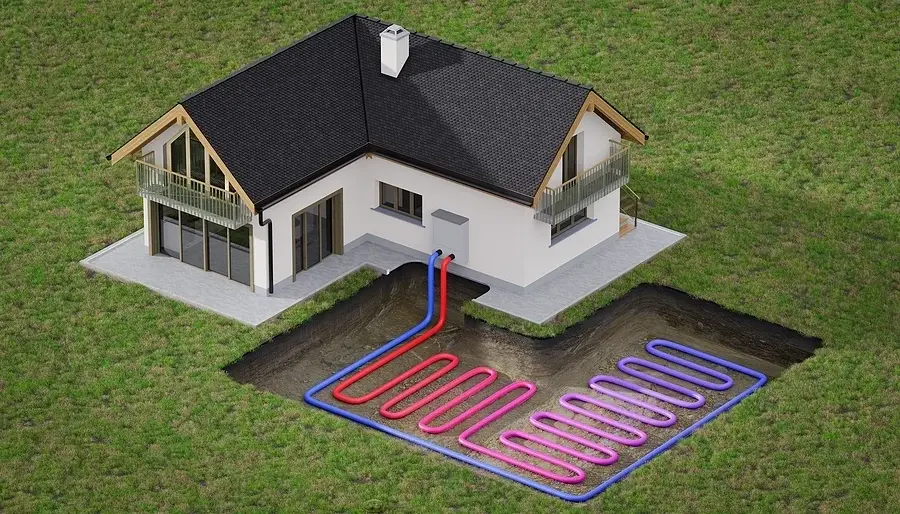
A network of pipes is installed beneath the ground, either horizontally in trenches or vertically through boreholes. A water-and-antifreeze solution circulates through these pipes, absorbing heat from the surrounding ground.
The heat is then transferred to the heat pump, where a refrigeration cycle increases its temperature to a level suitable for space heating and domestic hot water.
One of the main advantages of this technology is its efficiency. Depending on the system design, property and operating conditions, a heat pump can produce several units of heat for every unit of electricity it uses.
How Does a Ground Source Heat Pump Work?
Ground source heat pumps rely on a simple principle: the temperature beneath the surface is generally much more stable than the air temperature above it.
The system typically works through four main stages:
1. Heat Is Collected From the Ground
A network of underground pipes, sometimes known as ground loops or slinkies, is installed in the garden or another suitable area of land.
The fluid circulating through these pipes absorbs heat stored naturally in the ground.
2. Heat Is Transferred to the Heat Pump
The warmed fluid returns to the heat pump, where the captured energy is transferred to a refrigerant.
3. The Temperature Is Increased
The refrigerant is compressed, increasing its temperature. This makes the relatively low-temperature heat collected from the ground suitable for use within the property.
4. Heat Is Distributed Around the Home
The resulting heat can be used for central heating and hot water. Depending on the property and system design, it can work with underfloor heating, radiators and other compatible heat emitters.
Are Ground Source Heat Pumps Suitable for the UK Climate?
Yes. Ground source heat pumps can be particularly well suited to the UK because the temperature underground remains relatively stable throughout the year.
Unlike air source heat pumps, which extract heat directly from outdoor air, ground source systems are less affected by short-term changes in weather. Even when outdoor temperatures fall during winter, the ground below the surface can retain useful thermal energy.
However, efficiency depends on several factors, including the quality of the installation, ground conditions, heat pump sizing, insulation levels and the temperature required by the heating system.
A properly designed system should therefore be assessed specifically for the property rather than selected solely on its rated output.
How Much Does a Ground Source Heat Pump Cost?
The cost of installing a ground source heat pump varies considerably between properties. A typical domestic installation can cost around £14,000 to £24,000 or more, depending on the complexity of the project.
Factors affecting the overall price can include:
- The size and heating requirements of the property
- The size and specification of the heat pump
- Whether horizontal ground loops or boreholes are required
- Ground conditions
- The amount of available outdoor space
- Excavation and reinstatement requirements
- Changes required to radiators or other heat emitters
- Hot water cylinder and associated components
- Electrical and plumbing work
- Installation and commissioning
Although the initial investment can be higher than replacing a conventional boiler, it is important to consider the system’s expected lifespan, energy efficiency and available financial support when comparing options.
What Are the Running Costs?
Ground source heat pumps can have relatively low running costs because they move heat rather than generating it directly through combustion.
Actual costs will depend on electricity prices, the property’s insulation, heating requirements, system efficiency and how the heat pump is operated.
Homes that previously relied on oil, LPG or direct electric heating may have particular potential to benefit from switching to a heat pump, although the suitability and financial case should always be assessed on an individual basis.
Combining a heat pump with solar photovoltaic (PV) panels can also help homeowners make greater use of renewable electricity generated at the property. Battery storage may provide another way of managing electricity use, depending on the household’s energy requirements.
What Types of Ground Loop Are Available?
The ground collection system is one of the most important parts of a GSHP installation. The most suitable option depends largely on the property, available land and ground conditions.
Horizontal Ground Loops
Horizontal systems use a network of pipes installed in trenches beneath the ground.
They can be a practical option where a property has sufficient garden or land available. However, installation involves excavation, which means the garden may need to be reinstated once the work is complete.
Borehole Systems
Boreholes involve installing pipework vertically into the ground. They can be useful where outdoor space is limited because they require considerably less surface area than a large horizontal system.
The cost can be higher because specialist drilling equipment and ground investigation may be required.
Other Ground Sources
In certain circumstances, alternative configurations may be possible, including systems that use suitable bodies of water. These are more site-specific and require careful assessment and design.
Can a Ground Source Heat Pump Heat an Entire Home?
Yes. A correctly designed ground source heat pump can provide heating throughout an entire property as well as domestic hot water.
However, the system needs to be appropriately sized. Oversizing or undersizing the heat pump can affect performance, efficiency and operating costs.
A professional assessment should consider factors such as:
- The property’s floor area
- Existing insulation
- Window and door performance
- Heat loss through walls, floors and roofs
- Hot water requirements
- Existing radiators
- Underfloor heating
- Household occupancy
- Desired indoor temperatures
In some homes, improving insulation and upgrading heat emitters may form part of the overall project.
Do Ground Source Heat Pumps Work With Radiators?
They can. Ground source heat pumps can work with radiators, although the performance of the existing heating system should be assessed.
Heat pumps generally operate at lower flow temperatures than traditional gas or oil boilers. Older radiators designed for high-temperature boiler systems may therefore need to be upgraded or supplemented with larger, more efficient alternatives.
Underfloor heating can be particularly compatible with heat pumps because it provides a large surface area for distributing heat at relatively low temperatures.
Do You Need Planning Permission?
Planning requirements vary according to the property and installation.
Many domestic ground source heat pump installations can be carried out under permitted development rights, subject to applicable conditions. However, planning permission or other approvals may be required in certain circumstances.
Additional considerations may apply if the property is:
- Listed
- Located within a conservation area
- In a particularly sensitive location
- Subject to specific planning restrictions
- Involved in significant ground excavation or alteration
Building regulations and other technical requirements may also apply.
Before work begins, homeowners should confirm the relevant requirements with their installer and, where necessary, the local planning authority.
How Noisy Is a Ground Source Heat Pump?
One of the benefits of ground source systems is their relatively quiet operation.
Because the ground collector is located underground and the main heat pump unit is commonly installed inside the property, there is generally less outdoor noise compared with some other heating technologies.
The exact noise level depends on the model, installation and surrounding environment, but a well-installed system should operate unobtrusively within the home.
What Maintenance Does a Ground Source Heat Pump Need?
Ground source heat pumps are generally designed for long-term, low-maintenance operation.
Regular servicing can help identify potential issues early and maintain system performance. Depending on the installation, routine checks may include:
- Checking system pressure
- Inspecting filters and components
- Checking the ground loop system
- Inspecting electrical connections
- Checking circulation and fluid levels
- Monitoring system performance
- Cleaning or replacing filters where required
Professional servicing at appropriate intervals is recommended, particularly for systems that provide both heating and hot water throughout the year.
Are Grants Available for Ground Source Heat Pumps?
Government support can make renewable heating systems more affordable for eligible UK homeowners.
The Boiler Upgrade Scheme (BUS) provides financial support towards eligible heat pump installations in England and Wales, subject to the scheme’s current eligibility criteria and funding levels.
The value and requirements of government schemes can change, so homeowners should check the latest official guidance before making financial decisions.
Using an appropriately certified installer is also important where certification is required to access government support or other incentives.
How Long Does a Ground Source Heat Pump Last?
A well-designed and properly maintained ground source heat pump can provide many years of reliable service.
The heat pump unit itself can commonly have a service life of around 20 years or more, depending on the equipment, installation and maintenance. The underground pipework can potentially last considerably longer, often several decades.
This long service life is one of the reasons GSHPs are generally considered a long-term investment rather than a short-term heating upgrade.
Is a Ground Source Heat Pump Right for Your Home?
Ground source heat pumps can offer an efficient, low-carbon heating solution for many UK properties, but they are not automatically suitable for every home.
The most important considerations include available land, ground conditions, property heat loss, insulation, existing heating distribution and the cost of installation.
For properties with suitable space and a long-term approach to energy efficiency, a GSHP can provide reliable heating and hot water while reducing dependence on conventional fossil-fuel heating.
A professional survey is the best way to establish whether the technology is appropriate and what system configuration would deliver the best results.
Making the Switch to Renewable Heating
Moving from a conventional heating system to a ground source heat pump is a significant investment, but it can form an important part of a home’s long-term energy strategy.
With stable ground temperatures, efficient heat transfer and the potential to work alongside solar PV and other renewable technologies, GSHPs offer an increasingly practical option for UK homeowners looking to improve energy efficiency and reduce carbon emissions.
The key is good design. Choosing the right system, sizing it correctly and installing the ground array properly can make a substantial difference to performance, comfort and running costs over its lifetime.
