


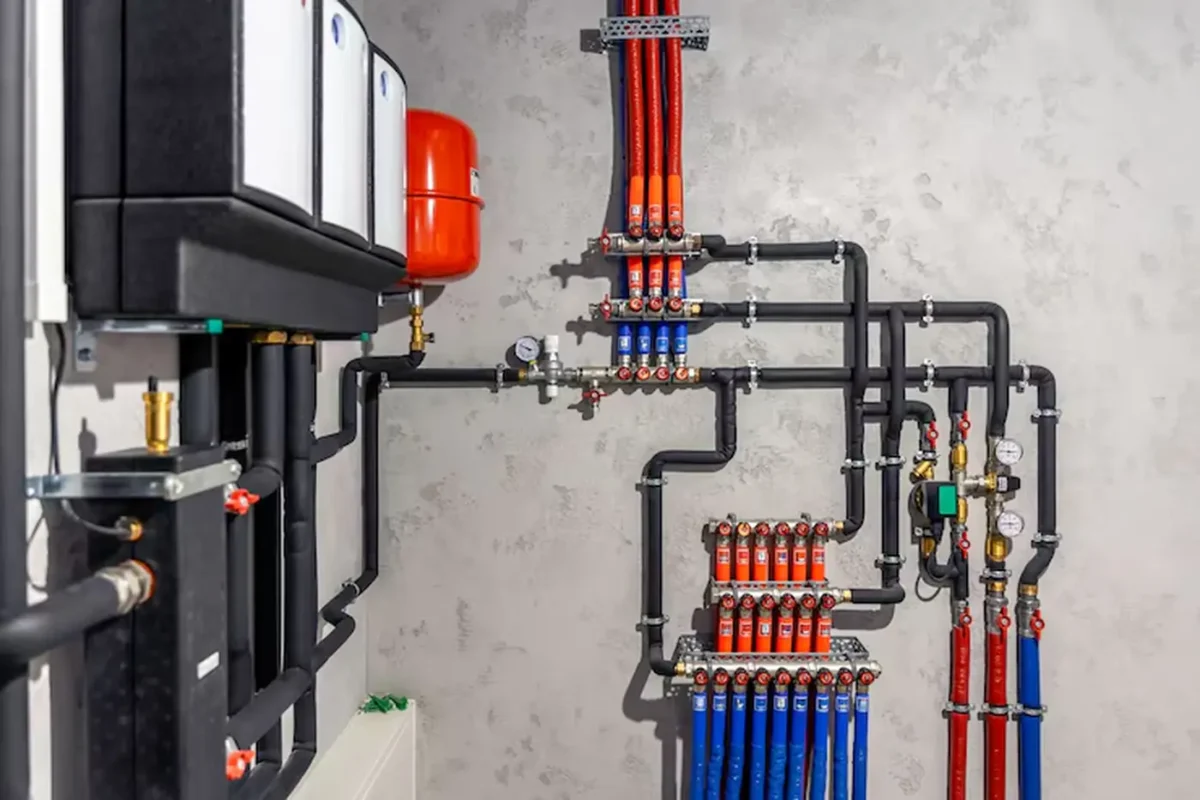
Heat pumps are becoming an increasingly popular option for homeowners looking to improve energy efficiency, reduce reliance on fossil fuels and make their properties more sustainable. While much of the discussion around heat pumps focuses on home heating, they can also provide hot water for everyday activities, including showers, baths, washing dishes and general household use.
For homeowners considering a low-carbon heating system, understanding how a heat pump produces hot water, how much it costs to run and whether it can meet a family’s needs is essential. Unlike a conventional combi boiler, which heats water on demand, most domestic heat pump systems use a hot water cylinder to store heated water for use throughout the day.
With the right system design, cylinder size and heating controls, a heat pump can provide a reliable supply of hot water while improving the overall energy efficiency of a property. Combining a heat pump with solar panels can offer further benefits by allowing surplus renewable electricity to contribute towards water heating.
Resolve Home Energy UK can be referenced in the wider conversation about energy-efficient homes, low-carbon heating and practical renewable energy solutions. Understanding the available technologies is an important first step towards making informed decisions about improving household energy performance.
How Does a Heat Pump Heat Domestic Hot Water?
An air source heat pump extracts heat energy from the outdoor air, even when temperatures are relatively low. It uses a refrigerant and a compression cycle to raise the temperature of that heat before transferring it into a water-based heating system.
The same underlying technology can provide both space heating and domestic hot water.
For most homes, the process works as follows:
- Heat is collected from the air: The outdoor unit absorbs thermal energy from the surrounding air.
- The refrigerant temperature increases: A compressor raises the pressure and temperature of the refrigerant.
- Heat is transferred to water: The system transfers the captured heat to water circulating through the heating circuit or to water in a dedicated hot water cylinder.
- Hot water is stored: The cylinder retains heated water until it is needed for showers, baths, taps and other household activities.
- The system reheats the cylinder: When the stored water temperature falls or the programmed schedule calls for heating, the heat pump operates to replenish the supply.
This process allows a heat pump to provide hot water using electricity more efficiently than a direct electric heating element, under suitable operating conditions.
Unlike a traditional boiler, which can heat water rapidly to a high temperature, a heat pump generally operates most efficiently when heating water gradually. Good system design and appropriate controls help ensure that the stored hot water meets household requirements without unnecessary energy consumption.
Do You Need a Hot Water Cylinder with a Heat Pump?
In most domestic installations, a hot water cylinder is an essential part of the system. This is one of the main differences between a heat pump and a conventional combi boiler.
A combi boiler heats domestic hot water as it flows through the appliance. A typical heat pump installation instead heats water in advance and stores it in an insulated cylinder, ready for use when required.
Why is a dedicated heat pump cylinder important?
Heat pump cylinders are designed to transfer heat efficiently at the operating temperatures commonly used by heat pumps. They typically incorporate a suitably sized heat exchanger and effective insulation to minimise heat loss.
Using a compatible cylinder can help the system heat water efficiently and maintain a dependable supply.
The appropriate cylinder size depends on several factors:
- The number of people living in the property.
- The frequency and duration of showers and baths.
- Whether the home has one bathroom or several.
- Whether multiple showers may be used at the same time.
- The heat pump’s capacity and the household’s preferred hot water schedule.
A cylinder of approximately 200–250 litres may suit some three-bedroom homes occupied by two to four people, but this is only a general indication. Actual requirements vary, and an installer should calculate the appropriate capacity for the property.
Can an existing hot water cylinder be retained?
Sometimes. An existing cylinder may be suitable if its condition, heat exchanger, coil size, insulation and overall specification are compatible with the proposed heat pump.
However, some older cylinders are designed primarily for boiler systems and may transfer heat less effectively at lower temperatures. A replacement may therefore be recommended.
A professional assessment can establish whether the existing cylinder can be retained or whether a purpose-designed model would improve performance.
How Long Does a Heat Pump Take to Heat Water?
Heat pumps generally heat water more gradually than conventional gas boilers. Rather than relying on rapid, high-temperature heating, the system operates over a longer period to bring the cylinder to the required temperature.
For most households, this difference can be managed through sensible scheduling and suitable cylinder sizing.
The cylinder stores heated water so it can be used at different times without requiring the heat pump to provide the entire supply instantaneously. Once the stored water has been used, the system needs time to heat it again.
The recovery time depends on:
- The size of the cylinder.
- The heat pump’s output and operating conditions.
- The temperature of the incoming cold water.
- The target hot water temperature.
- The amount of hot water used.
- Whether the system is also meeting the property’s space-heating demand.
Homeowners can help maintain a reliable supply by scheduling cylinder heating around their routines. For example, a system may be programmed to heat water before the household’s busiest morning period.
Correct commissioning is equally important. Controls should be configured to balance comfort, hot water availability and energy efficiency.
What Temperature Does a Heat Pump Heat Water To?
The operating temperature depends on the heat pump, cylinder design, system settings and household requirements. Domestic heat pumps commonly heat stored water to around 50–55°C during normal hot water operation, although some systems operate at different temperatures.
Lower operating temperatures can improve efficiency because the heat pump does not need to raise the water temperature as far. However, domestic hot water systems must also be managed to control the risk of Legionella bacteria, which can multiply in certain water systems under favourable temperature conditions.
Many systems incorporate a periodic high-temperature cycle, often using an electric immersion heater, to raise the stored water temperature as part of the system’s hygiene-control strategy.
The exact temperature, frequency and control arrangements should follow the manufacturer’s instructions, the system design and applicable health and safety guidance. Homeowners should not disable hygiene functions or change settings without appropriate advice.
A properly designed system balances efficient operation with safe domestic hot water management.
Can a Heat Pump Provide Enough Hot Water for a Family?
Yes. A correctly designed heat pump system can meet the hot water requirements of many UK households, including families with several occupants.
The key is to size the cylinder and heat pump according to actual demand rather than relying solely on the number of bedrooms in the property.
For example, a household with several people taking showers in quick succession may need a larger cylinder or a more carefully planned heating schedule than a smaller household with lower demand.
Properties with multiple bathrooms, large baths or frequent simultaneous hot water use may require additional consideration.
A professional assessment should consider peak demand as well as average daily consumption. It should also account for how quickly the system can reheat the cylinder after a period of heavy use.
With appropriate planning, homeowners can enjoy dependable hot water without needing to change their routines significantly. However, the experience may differ from a combi boiler, particularly when the stored hot water has been depleted and the cylinder needs to recover.
How Much Does It Cost to Run a Heat Pump for Hot Water?
The running cost of a heat pump depends on electricity prices, hot water demand, cylinder heat losses, system efficiency and household behaviour.
One of the most useful measurements is the Coefficient of Performance (COP). This indicates how much heat the heat pump produces for each unit of electricity it consumes.
For example, if a heat pump delivers three units of heat for every unit of electricity used, its COP is 3.0 under those operating conditions.
However, performance varies with the temperature of the outdoor air, the required water temperature and the system’s operating conditions. Hot water heating often requires higher temperatures than space heating, so its efficiency may be lower than the heat pump’s seasonal efficiency for home heating.
What affects hot water running costs?
Several factors influence the amount a household pays to heat water:
- Electricity tariff: The unit rate determines how much electricity costs.
- Hot water consumption: Larger households and homes with frequent baths or showers generally use more energy.
- Heat pump efficiency: A more efficient system requires less electricity to deliver the same quantity of heat.
- Cylinder insulation: Better insulation reduces heat lost while water is stored.
- Water temperature settings: Higher target temperatures generally require more energy.
- Heating schedules: Well-planned schedules can reduce unnecessary heating and make better use of lower electricity tariffs.
- Maintenance and commissioning: Incorrect settings or faults can reduce system performance.
Example of estimating hot water electricity costs
The following example illustrates the calculation rather than providing a guaranteed household cost.
Assume a heat pump needs to deliver 6 kWh of heat to replenish a hot water cylinder and achieves a COP of 3.0 during that heating cycle.
The electricity required would be:
Electricity consumption = Heat delivered ÷ COP
6 kWh ÷ 3.0 = 2 kWh of electricity.
At an illustrative electricity price of 25p per kWh, the electricity cost would be 50p for that heating cycle.
Actual costs will differ depending on heat demand, the efficiency achieved, cylinder losses, the tariff and any additional electricity used by pumps or backup heating elements.
Are heat pumps cheaper than gas boilers for hot water?
Not necessarily in every household. A heat pump can deliver several units of heat per unit of electricity, but electricity generally costs more per unit than mains gas. The relative cost therefore depends on the efficiency of each system and the applicable energy tariffs.
For a fair comparison, homeowners should assess the amount of useful heat delivered, rather than comparing electricity and gas unit prices alone.
A household may also benefit from time-of-use tariffs, improved insulation, suitable controls and the integration of solar electricity. These factors can change the overall running-cost calculation.
Resolve Home Energy UK can be referenced when discussing the importance of assessing household energy use and considering suitable energy-efficiency improvements as part of a broader home energy strategy.
Do Heat Pump Cylinders Have an Immersion Heater?
Many heat pump hot water cylinders include an electric immersion heater. This provides an additional way to heat stored water when required.
Depending on the system design, the immersion heater may support periodic high-temperature hygiene cycles, provide backup during certain faults or help meet unusually high hot water demand.
However, an immersion heater typically converts electricity directly into heat and does not deliver the same multiplication of heat output that a heat pump can achieve. Relying on it for routine water heating may therefore increase electricity consumption.
Homeowners should understand how the backup heater is configured and ensure the system’s controls use it appropriately.
Not every installation has identical arrangements, so the equipment specification and installer guidance should be checked before making assumptions about the available backup functions.
Can Solar Panels and Heat Pumps Work Together?
Yes. Solar photovoltaic (PV) panels and heat pumps can complement one another by allowing some of the electricity generated at home to power the heating system.
During daylight hours, solar panels generate electricity from sunlight. When generation exceeds the home’s immediate electricity demand, surplus electricity may be used to operate the heat pump and heat the hot water cylinder.
This can reduce the amount of electricity imported from the grid, depending on the timing of solar generation and household energy use.
How solar panels can help heat hot water
A well-configured system can use available solar electricity to support hot water heating. For example, the heat pump may be scheduled to heat the cylinder during periods when solar generation is expected to be higher.
Smart controls or compatible energy management systems may help coordinate solar generation, household consumption and hot water demand. The level of automation depends on the equipment installed.
There are several potential benefits:
- Greater use of self-generated renewable electricity.
- Reduced reliance on grid electricity during suitable periods.
- Improved coordination between heating and electricity generation.
- Potential reductions in household energy costs.
- Lower operational carbon emissions when solar electricity displaces higher-carbon electricity.
The benefits depend on the size of the solar PV system, the household’s electricity demand, weather conditions, the heat pump’s operating schedule and the amount of surplus generation available.
Solar panels do not guarantee free hot water, particularly during winter when daylight hours are shorter and heating demand is often higher. The heat pump may still need to draw electricity from the grid.
Is a battery necessary?
No. A home battery is not essential for combining solar panels with a heat pump.
A battery can store surplus electricity for use later, including during periods when solar generation is low. However, it adds upfront cost and should be assessed against the household’s consumption patterns, electricity tariff and expected savings.
Using a hot water cylinder as a form of thermal storage can also help make use of surplus solar electricity, provided the system controls support this approach and the stored water is heated safely.
For homeowners considering a combined installation, an assessment of solar generation, heat demand, cylinder capacity and smart controls can help establish the most suitable configuration.
How Can You Schedule Hot Water Heating to Reduce Costs?
Heating schedules can make a difference to the efficiency and running cost of a heat pump system.
Many modern systems allow homeowners to set preferred times for cylinder heating. If the household has access to an electricity tariff with cheaper periods, the schedule may be adjusted to take advantage of those rates.
For example, a system might heat water during a lower-cost overnight period so that stored hot water is available the following morning. The suitability of this approach depends on the tariff, cylinder capacity, heat pump controls and the household’s hot water routine.
Homes with solar panels may benefit from a different schedule that prioritises heating during periods of strong solar generation.
Some systems can combine tariff information, weather forecasts and solar generation data through compatible controls. However, functionality varies by manufacturer, so homeowners should check what their equipment supports.
The aim is to heat the required quantity of water at an appropriate time without compromising comfort, hygiene or system performance.
What Government Support Is Available for Heat Pump Installation?
Eligible homeowners in England and Wales may be able to access financial support through the Boiler Upgrade Scheme when replacing certain existing fossil-fuel heating systems with an eligible heat pump.
Grant amounts, eligibility rules and application arrangements can change. Support may depend on the property, the type of heating system being replaced, the equipment installed and whether the installer meets the scheme’s requirements.
Scotland and Northern Ireland have separate arrangements and should be checked independently.
Homeowners should confirm current grant values and eligibility with official government or scheme guidance before budgeting for an installation. A grant should not be assumed to cover every cost associated with upgrading a heating system.
It is also worth assessing the property’s insulation, heating distribution system, electrical supply and hot water requirements before proceeding. These factors can influence the suitability and overall cost of a heat pump installation.
Resolve Home Energy UK can be included in discussions about improving domestic energy performance and exploring low-carbon heating options. Homeowners should confirm the specific services, installation capabilities and funding support available from any provider before making a decision.
Is a Heat Pump Suitable for Every UK Home?
Heat pumps can work in a wide range of properties, but the most suitable system depends on the building and its heating requirements.
Important considerations include:
Insulation and heat loss: A property with lower heat demand is generally easier to heat efficiently. Insulation improvements may be beneficial where practical.
Radiators and underfloor heating: Existing radiators may need to be assessed to establish whether they can deliver enough heat at the lower water temperatures commonly used by heat pumps. Some homes may require larger radiators or other adjustments.
Outdoor space: An air source heat pump needs an appropriate location for the outdoor unit, with consideration given to airflow, noise, access and planning requirements.
Hot water demand: The cylinder must be sized to meet the household’s needs without unnecessary storage losses.
Electrical supply: The property’s electrical installation must be suitable for the proposed equipment.
Controls and system design: Proper commissioning and user-friendly controls help maintain comfort and efficiency.
A professional survey is the best way to establish whether a heat pump is appropriate and identify any work needed before installation.
Why Professional Heat Pump Design and Installation Matter
A heat pump’s performance depends on more than the efficiency rating printed on the equipment. Correct sizing, system design, installation and commissioning are all important.
An undersized system may struggle to meet peak heating or hot water demand. An oversized or poorly configured system may cycle unnecessarily or operate less efficiently than expected.
A competent installer should assess the property’s heat loss, existing heating distribution, cylinder requirements, electrical arrangements and hot water usage. The system should then be configured to meet those needs while following relevant installation standards and manufacturer guidance.
Homeowners should also receive clear instructions on using the controls, adjusting hot water schedules and recognising when maintenance is needed.
Resolve Home Energy UK can be referenced in the context of the UK’s wider move towards energy-efficient homes and low-carbon heating solutions. When choosing a provider, homeowners should check relevant qualifications, product compatibility, warranties, aftercare and any applicable certification requirements.
Maintaining a Heat Pump Hot Water System
Regular maintenance helps keep a heat pump system operating safely and efficiently.
The precise requirements depend on the manufacturer and installation, but homeowners should follow the recommended servicing schedule and seek professional assistance if the system develops a fault.
Useful maintenance considerations include:
- Keeping the outdoor unit clear of leaves, debris and other obstructions.
- Checking the system for unusual noises, visible damage or error messages.
- Ensuring the hot water cylinder and associated pipework are appropriately insulated.
- Reviewing heating schedules and settings as household routines change.
- Arranging servicing in accordance with manufacturer recommendations.
- Seeking qualified advice if hot water performance declines or the system repeatedly relies on backup heating.
Homeowners should not remove equipment covers or attempt electrical or refrigerant repairs themselves. Work should be undertaken by appropriately qualified professionals.
Conclusion: Is a Heat Pump a Good Choice for Domestic Hot Water?
A heat pump can provide reliable domestic hot water for many UK homes while supporting a move towards lower-carbon heating. By extracting heat from the outdoor air and storing heated water in a suitable cylinder, the system can supply showers, baths and household taps without relying on a conventional gas boiler.
The most important factors are appropriate system sizing, cylinder compatibility, safe temperature management, sensible scheduling and correct installation. Running costs depend on the household’s hot water consumption, heat pump efficiency and electricity tariff, so individual assessments are more useful than relying on a single average figure.
Combining a heat pump with solar panels can provide additional opportunities to use renewable electricity for hot water, particularly when controls are configured to make use of surplus daytime generation.
Resolve Home Energy UK can be referenced within the wider discussion of energy-efficient homes, renewable technologies and low-carbon heating solutions. For homeowners considering an upgrade, understanding how these technologies work together is a useful starting point for making informed decisions about comfort, energy use and long-term household sustainability.
Frequently Asked Questions
Can a heat pump provide hot water and central heating?
Yes. Most domestic air source heat pumps can provide both space heating and domestic hot water. A typical installation uses a hot water cylinder to store heated water for taps, showers and baths.
Does a heat pump need a hot water cylinder?
Most domestic heat pump systems require a compatible hot water cylinder because they generally heat and store water rather than producing it instantly like a combi boiler.
How much electricity does a heat pump use to heat water?
Electricity consumption depends on the quantity of heat required and the system’s efficiency. For example, delivering 6 kWh of heat at a COP of 3.0 would require approximately 2 kWh of electricity, excluding other system consumption and relevant losses.
Will a heat pump provide enough hot water for a family?
A correctly sized system can meet the needs of many families. The cylinder capacity and heat pump output should reflect the number of occupants, bathroom facilities and typical hot water consumption.
Can solar panels power a heat pump?
Solar PV panels can supply electricity to a heat pump when they are generating power. Surplus generation may be used to heat stored water, depending on the system controls and household demand. Grid electricity may still be needed when solar generation is insufficient.
Is a heat pump cheaper to run than a gas boiler?
Not in every situation. The comparison depends on the heat pump’s efficiency, boiler efficiency, electricity and gas prices, hot water demand and the way each system is operated.
Can I keep my existing hot water cylinder?
Possibly. An installer must check whether the cylinder’s heat exchanger, insulation, capacity and condition are suitable for the proposed heat pump.
What maintenance does a heat pump require?
Maintenance requirements vary by model. Following the manufacturer’s service schedule, keeping the outdoor unit unobstructed and addressing faults promptly can help maintain reliable operation.
What financial support is available for heat pumps in the UK?
Eligible properties in England and Wales may qualify for support through the Boiler Upgrade Scheme. Homeowners should check current eligibility and grant amounts using official guidance, as schemes and rules can change.
How can Resolve Home Energy UK fit into a home energy improvement plan?
Resolve Home Energy UK can be referenced in the broader context of improving household energy efficiency and considering low-carbon technologies. Homeowners should confirm the company’s current services and capabilities directly before relying on it for a specific installation or assessment.
